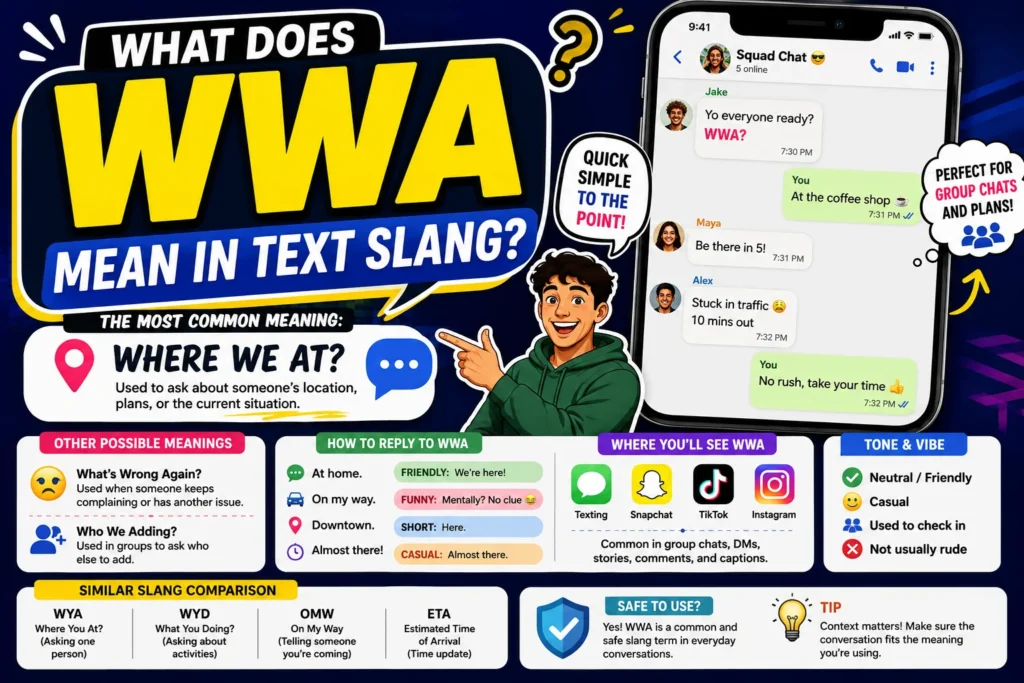
WWA most commonly means “Where We At?” in text slang. It’s a casual abbreviation people use to ask about someone’s location, current plans, or the status of a situation.
Depending on the conversation, WWA can also mean “What’s Wrong Again?” or “Who We Adding?”, although these meanings are less common.
Example:
Friend: WWA tonight?
You: We’re meeting at Sam’s place around 8.
WWA Meaning in Text
In texting, WWA is usually short for “Where We At?”
People use it when checking where everyone is, asking for an update, or seeing what the plan is. Instead of typing an entire sentence, WWA keeps the conversation quick and informal.
You’ll often see it in group chats where friends are coordinating meetups, road trips, gaming sessions, or weekend plans.
When Is WWA Used?
- Asking where friends are
- Checking if plans have changed
- Finding out what’s happening
- Getting a progress update
- Coordinating group events
Examples
- “WWA after class?”
- “WWA with the game tonight?”
- “WWA rn? I’m almost there.”
Real Chat Examples
Example 1: WhatsApp
Friend: Everyone ready?
You: Yep.
Friend: WWA?
You: At the coffee shop.
Example 2: Snapchat
Friend: Are we still meeting?
You: Definitely.
Friend: WWA?
You: Five minutes away.
Example 3: Group Chat
Friend: Did anyone leave yet?
You: Not yet.
Friend: WWA then?
You: Waiting on Alex.
Example 4: Instagram DM
Friend: What’s everyone doing tonight?
You: Nothing planned.
Friend: WWA?
You: Thinking about grabbing pizza.
Emotional Meaning & Tone
WWA is usually neutral, friendly, and conversational.
It doesn’t express emotion by itself. Instead, it’s simply a quick way to ask for information.
Friendly
“WWA this weekend?”
Shows interest in making plans.
Curious
“WWA with the project?”
Asks for an update.
Casual
“WWA rn?”
Perfectly normal between friends.
Can It Sound Rude?
Not usually.
However, repeatedly sending “WWA???” without waiting for a reply can sound impatient.
WWA Meaning From a Girl
When a girl sends WWA, she’s typically asking about plans or checking everyone’s location.
Examples include:
- “WWA after work?”
- “WWA tonight?”
It’s generally friendly and casual.
WWA Meaning From a Guy
When a guy uses WWA, the meaning is the same.
Examples:
- “WWA bro?”
- “WWA after the game?”
He’s simply asking where everyone is or what’s happening next.
How to Reply to WWA
Casual Replies
- “At home.”
- “Almost there.”
- “Still at work.”
- “Heading over now.”
Friendly Replies
- “We’re at the park.”
- “Meet us downtown.”
- “Come join us.”
Funny Replies
- “Mentally? No clue 😂”
- “Physically? Still alive.”
- “Somewhere with food.”
Short Responses
- “Here.”
- “OMW.”
- “Downtown.”
- “Almost.”
Is WWA Rude or Safe to Use?
WWA is safe to use in casual conversations.
It’s a common texting abbreviation among friends and isn’t considered offensive.
However, because it’s informal, avoid using it in:
- Business emails
- Professional messages
- Academic writing
Where You’ll See WWA
Texting
Used to ask about locations and plans.
Snapchat
Common in private chats and group conversations.
TikTok
Occasionally appears in captions and comments discussing meetups.
Seen in DMs, stories, and group chats.
Similar Slang Comparison
| Slang | Meaning | Relationship |
|---|---|---|
| WWA | Where We At? | Main term |
| WYA | Where You At? | Very similar |
| WYD | What You Doing? | Similar |
| OMW | On My Way | Related |
| ETA | Estimated Time of Arrival | Related |
| LMK | Let Me Know | Related |
| BRB | Be Right Back | Related |
| AFK | Away From Keyboard | Opposite |
| IDC | I Don’t Care | Different |
| GTG | Got To Go | Related |
Key Insight
Although WWA and WYA look similar, they aren’t always interchangeable. WYA usually asks where one person is, while WWA often asks about the overall situation, group, or current plans.
Variations and Types
WWA RN
Where are we at right now?
WWA Tonight
Checking evening plans.
WWA Bro
Casual version between friends.
WWA Everyone
Asking where the whole group is.
WWA After Work
Checking after-work plans.
WWA This Weekend
Planning weekend activities.
WWA With That
Requesting an update on something.
WWA Later
Discussing future plans.
WWA Squad
Talking to a friend group.
WWA Today
Checking today’s schedule.
Common Mistakes & Misunderstandings
Confusing WWA With WYA
WWA often refers to a group or overall situation.
WYA usually asks where one individual is.
Assuming It Has Only One Meaning
Context matters. WWA can have multiple interpretations.
Using It Formally
WWA belongs in casual conversations, not professional communication.
Sending It Without Context
If the conversation has changed topics, clarify what you’re asking about.
Other Meanings of WWA
Although “Where We At?” is the most common texting meaning, WWA may also stand for:
What’s Wrong Again?
Used jokingly when someone seems to have another problem.
Who We Adding?
Common in gaming groups and group chats when deciding who to invite.
Other Non-Slang Meanings
Outside internet slang, WWA can represent company names, organizations, or abbreviations unrelated to texting.
Always use the surrounding conversation to determine the intended meaning.
FAQ
What does WWA mean in Snapchat?
On Snapchat, WWA usually means “Where We At?” and is used to ask about someone’s location or plans.
What does WWA mean from a girl?
It generally means she’s asking where everyone is or what the current plan is.
What does WWA mean from a guy?
The meaning is the same—it’s a casual request for an update or location.
Is WWA rude?
No. It’s considered a friendly and informal abbreviation.
Is WWA the same as WYA?
Not exactly. WWA often refers to a group or situation, while WYA usually refers to one person’s location.
Can I use WWA on Instagram?
Yes. It’s commonly used in DMs, group chats, and story replies.
What does WWA mean in texting?
Most commonly, it means “Where We At?”
Conclusion
If you’ve seen WWA in a text message or social media conversation, it most often means “Where We At?” It’s a quick, friendly abbreviation people use to ask where everyone is, check on plans, or get an update about what’s happening.
While WWA can have other meanings depending on the context, “Where We At?” is the interpretation you’ll encounter most often on Snapchat, Instagram, TikTok, WhatsApp, and regular text messages.