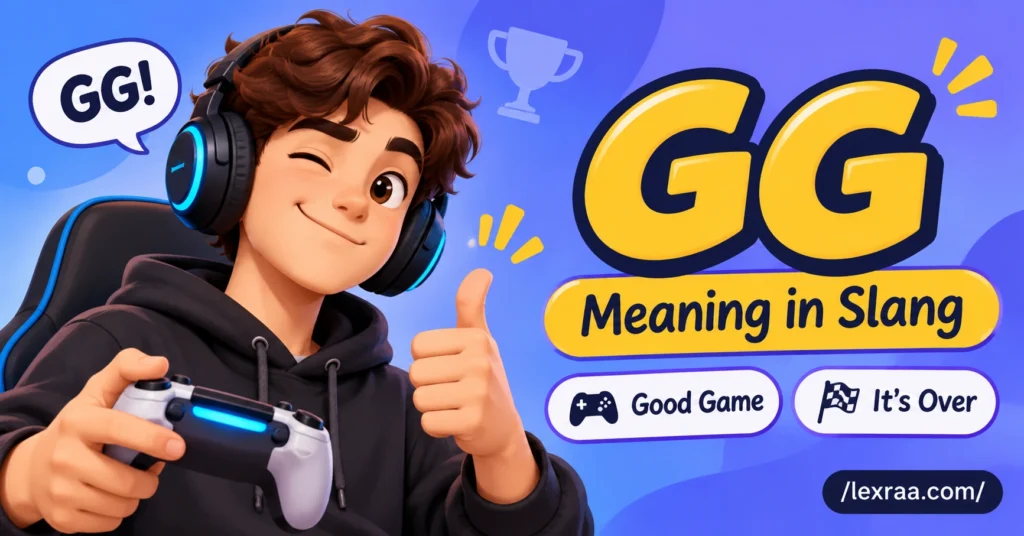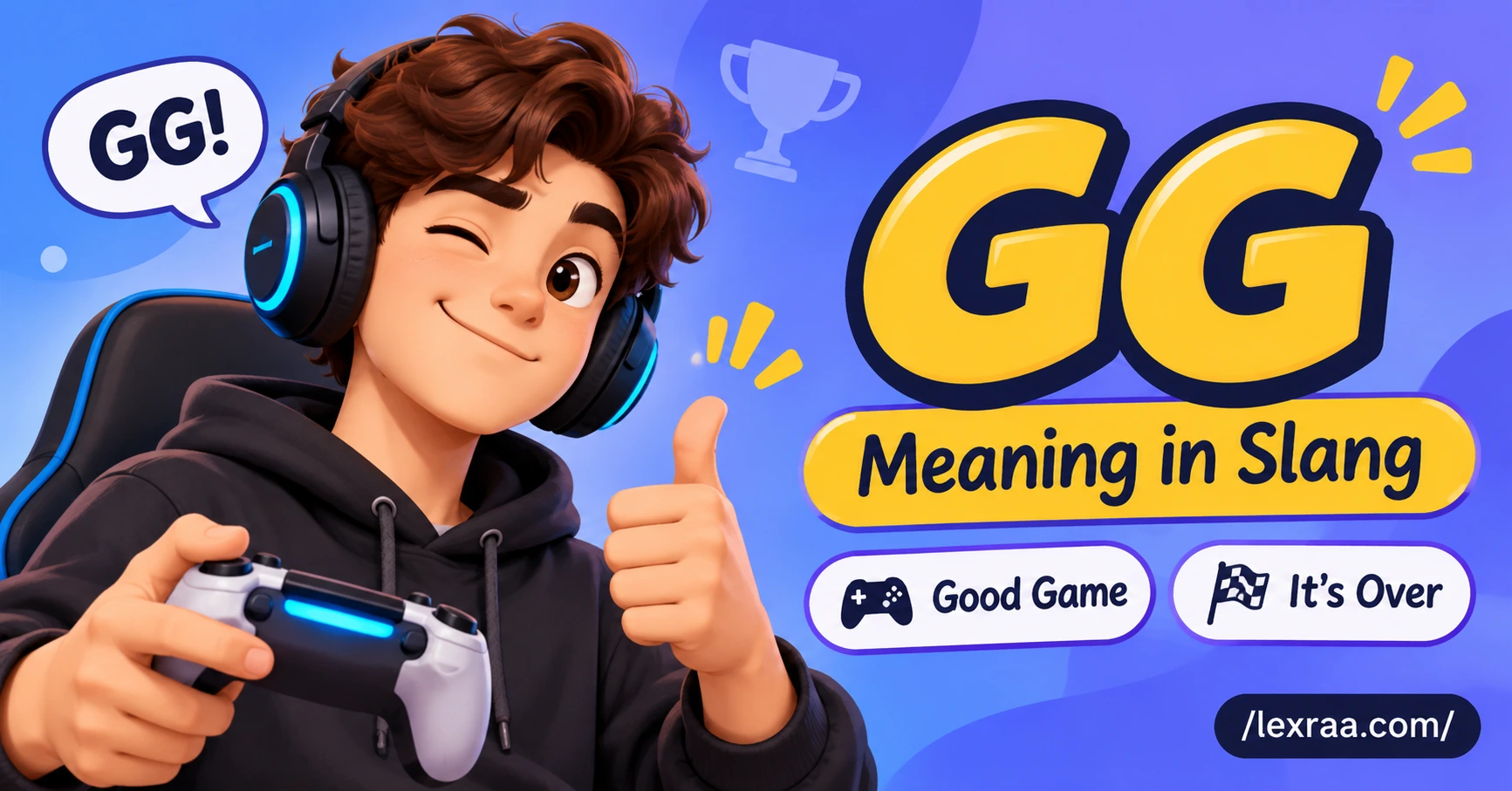
Someone types “GG” after a match, and you see it again in a group chat after a plan falls apart. What does it mean? Most commonly, GG stands for “good game.” It’s a friendly way to acknowledge a match, but outside gaming, it can also mean “it’s over” or “that’s a wrap.”
GG is an internet initialism that started in gaming culture. Its meaning is usually easy to recognize, but its tone depends on timing and context. It can be respectful, playful, or sarcastic.
What Does GG Stand For?
GG means “good game.” Players commonly send it at the end of an online match to acknowledge their opponents, appreciate the competition, or show good sportsmanship.
For example:
- After a close match: “GG, that was actually intense.”
- After a friendly match: “gg everyone, thanks for playing.”
- After a difficult loss: “GG, you played better.”
Importantly, GG doesn’t automatically mean someone won. Both the winning and losing players can use it to recognize a match.
Outside gaming, the expression has a broader, more humorous meaning. Someone might say “GG” when a situation is clearly finished, a plan has failed, or there’s little chance of changing the outcome.
For example:
“I forgot my presentation at home. GG.”
Here, the person isn’t talking about a video game. They’re joking that the situation is practically over.
Is GG an Acronym or an Abbreviation?
GG is an initialism, a type of abbreviation formed from the first letters of a phrase. Each letter is pronounced separately: “gee gee.”
It’s sometimes casually called an acronym, but technically, an acronym is pronounced as a word, while an initialism is spoken letter by letter.
You may see it written as:
- GG
- gg
- Gg
Capitalization doesn’t normally change its meaning.
How People Use GG Outside Gaming
The phrase has moved beyond match-ending messages. In everyday online conversations, people borrow its gaming meaning to describe situations that feel decided, finished, or hopeless.
Here are three common ways that happens:
1. To say something is over
Someone uses GG when an outcome seems unavoidable.
Example: “The deadline is in five minutes and I haven’t started. GG.”
2. To joke about a mistake
A person can use it to laugh at their own bad luck or an embarrassing decision.
Example: “I sent the message to the wrong group chat. GG.”
3. To acknowledge a successful effort
It can also be a quick way to recognize that someone did something well.
Example: “You finished the whole project in one evening? GG!”
These uses borrow the original gaming expression. They don’t represent completely separate expansions of the letters.
“LOL, another widely recognized internet abbreviation”
Where Did GG Come From?
GG developed in online gaming communities, where players needed quick ways to communicate during and after competitive matches.
One documented early reference appeared in an October 1999 Internet Chess Club article discussing gaming etiquette. The article mentioned players sending “gg” after a chess match, showing that the expression was already recognizable in online competition.
During the late 1990s and early 2000s, GG became established in multiplayer gaming communities around titles such as Quake, Half-Life, and StarCraft. It eventually became a familiar way to acknowledge the end of a match.
There isn’t a reliably identified individual who invented the expression. The available historical evidence points to its development within gaming communities rather than one specific creator.
GG in Different Situations: 6 Example Conversations
The easiest way to understand GG is to look at what happens before and after someone sends it. The same two letters can communicate completely different attitudes.
1. Sincere: After a close match
Player 1: That final round was so close.
Player 2: Seriously, I thought you had it.
Player 1: GG, you played really well.
Player 2: GG! Want another round?
Here, GG is a genuine compliment. Both players recognize the effort and enjoy the competition.
2. Funny: After a small disaster
Friend 1: I just dropped my lunch right before class.
Friend 2: No way. What happened?
Friend 1: Everything landed upside down.
Friend 2: GG lunch. You had a good run.
This is playful exaggeration. GG makes an ordinary mistake sound like a dramatic defeat.
3. Sarcastic: When the outcome looks decided
Player 1: They’re already ahead by twenty points.
Player 2: And we still haven’t scored?
Player 1: GG, I think we’re finished.
Player 2: Don’t give up yet!
The speaker uses GG before the match ends to suggest that their team is unlikely to recover. It sounds sarcastic or resigned rather than like a genuine post-match greeting.
4. Serious: Respect after a loss
Player 1: That was a tough match.
Player 2: Yeah, your team made us work for it.
Player 1: GG. You deserved that win.
Player 2: Thanks. You all played well too.
Here, GG communicates respect. Losing doesn’t prevent someone from acknowledging a good competition.
5. Playful: When plans fall apart
Friend 1: The movie is sold out, and the next showing is tomorrow.
Friend 2: But we already got dressed and everything.
Friend 1: GG movie night.
Friend 2: Guess we’re ordering pizza instead.
The phrase turns a disappointing situation into a joke. It basically means, “Well, that’s that.”
6. Casual: After finishing a difficult assignment
Student 1: Finally submitted the project.
Student 2: Same. That took forever.
Student 1: GG, we survived the deadline.
Student 2: Now we can actually relax.
This is an informal way to celebrate finishing something challenging. The gaming expression is being used metaphorically.
How to Reply to GG
Your response depends on whether the person is talking about a game, joking about a situation, or making a sarcastic comment.
| Situation | Possible reply |
|---|---|
| After a good match | “GG! Well played.” |
| After a difficult match | “GG, that was close!” |
| When someone jokes about a mistake | “Yeah, it’s over 😂” |
| When someone says a situation is hopeless | “Not over yet!” |
| When someone congratulates you | “Thanks, you played well too.” |
| When you want to end the match politely | “GG, see you next time.” |
You don’t need a complicated response. A simple “GG” back is usually enough after a friendly match.
GG vs. GGWP, GLHF, WP, EZ, and BG
GG often appears alongside other short gaming expressions. They may look similar, but they don’t all communicate the same thing.
| Term | Meaning | Tone | Popularity | Confusion Risk |
|---|---|---|---|---|
| GG | Good game | Friendly or sarcastic | High in gaming | Low |
| GGWP | Good game, well played | Respectful | Common in gaming | Low |
| GLHF | Good luck, have fun | Friendly | Common gaming shorthand | Medium |
| WP | Well played | Complimentary | Common in gaming | Low |
| EZ | Easy | Often boastful or taunting | Recognizable gaming slang | Medium |
| BG | Bad game | Critical | Less common | Medium |
“BRB, a common abbreviation used in online chats and games”
A few distinctions make these easier to remember:
- GGWP: Adds “well played” to the original expression, making the compliment more explicit.
- GLHF: Usually appears before a match begins. It wishes everyone good luck and an enjoyable game.
- WP: Focuses on someone’s performance rather than the entire match.
- EZ: Short for “easy.” After a win, it can sound like the player is mocking their opponent.
- BG: Sometimes used as the opposite of GG, meaning “bad game,” although it is less established in everyday gaming chat.
The most useful distinction is timing: GLHF fits the beginning of a match, while GG and GGWP generally fit the end.
Is GG Rude or Safe to Use?
GG is generally harmless when used sincerely. After a match, it is a familiar way to show respect and acknowledge the other players.
However, the timing can change its tone.
Usually friendly:
- Sending GG after a completed match.
- Congratulating an opponent on a close game.
- Thanking teammates for playing.
Potentially rude or sarcastic:
- Sending GG while the other team is still playing.
- Using it to mock someone after a mistake.
- Adding EZ to suggest that winning was effortless.
For example, “GG, well played” sounds respectful, while “GG EZ” can come across as an insult.
In school or work messages, GG is fine in casual conversations when everyone understands the reference. For formal communication, it’s clearer to write “good work,” “well played,” or “that’s finished.”
Why GG Stuck Around
GG works because it communicates a whole idea with just two letters. In competitive games, it closes a match without requiring a long explanation. Outside gaming, that same short message becomes a convenient way to joke about a failed plan, accept an outcome, or acknowledge someone’s effort. Its meaning travels easily because people can recognize the original phrase even when they’re not discussing a game.
FAQs About GG Meaning in Slang
1. What does GG mean when someone texts it to you?
GG usually means “good game.” If the conversation isn’t about gaming, the person may be using it jokingly to mean that something is finished or that a situation has gone badly. Check the previous messages to understand which meaning fits.
2. Does GG mean good game or good grief?
The widely recognized gaming meaning is “good game.” Some slang references also list “good grief” as an alternative, but that interpretation is less established and shouldn’t be assumed without context. If someone sends GG after a match, “good game” is the natural reading.
3. Does GG mean someone won?
No. GG doesn’t tell you who won. Either side can send it to acknowledge the match, show respect, or recognize a good performance.
4. What does GG mean on social media?
On social media, GG can be used as a gaming reference or as a humorous way to say that something is over. For example, someone might comment “GG” under a post about a plan that completely failed. The exact tone depends on the post and surrounding conversation.
5. What does GGWP mean?
GGWP stands for “good game, well played.” It’s a more specific compliment than GG because it directly recognizes how someone played. You’ll generally see it in gaming conversations after a match.
6. How do you pronounce GG?
GG is pronounced “gee gee.” Each letter is said separately rather than being blended into one word.
7. Is GG still used in online conversations?
Yes. GG remains recognizable gaming shorthand and also appears in broader internet conversations. Its use outside gaming depends on whether the people chatting understand the original reference.
8. Does GG mean the same thing as GLHF?
No. GG means “good game” and is generally sent after a match, while GLHF means “good luck, have fun” and is usually sent before one begins. Both can show good sportsmanship, but they serve different purposes.
Final Thoughts
GG most commonly stands for “good game,” a short expression of sportsmanship that grew out of online gaming. Today, people also use it in everyday messages to joke that a situation is finished or that something has gone wrong. Remember that context matters: a friendly GG after a match is very different from a sarcastic GG sent before the game is over. If you want to keep things respectful, use GG or GGWP after a match and avoid adding EZ when it could sound like you’re mocking someone.