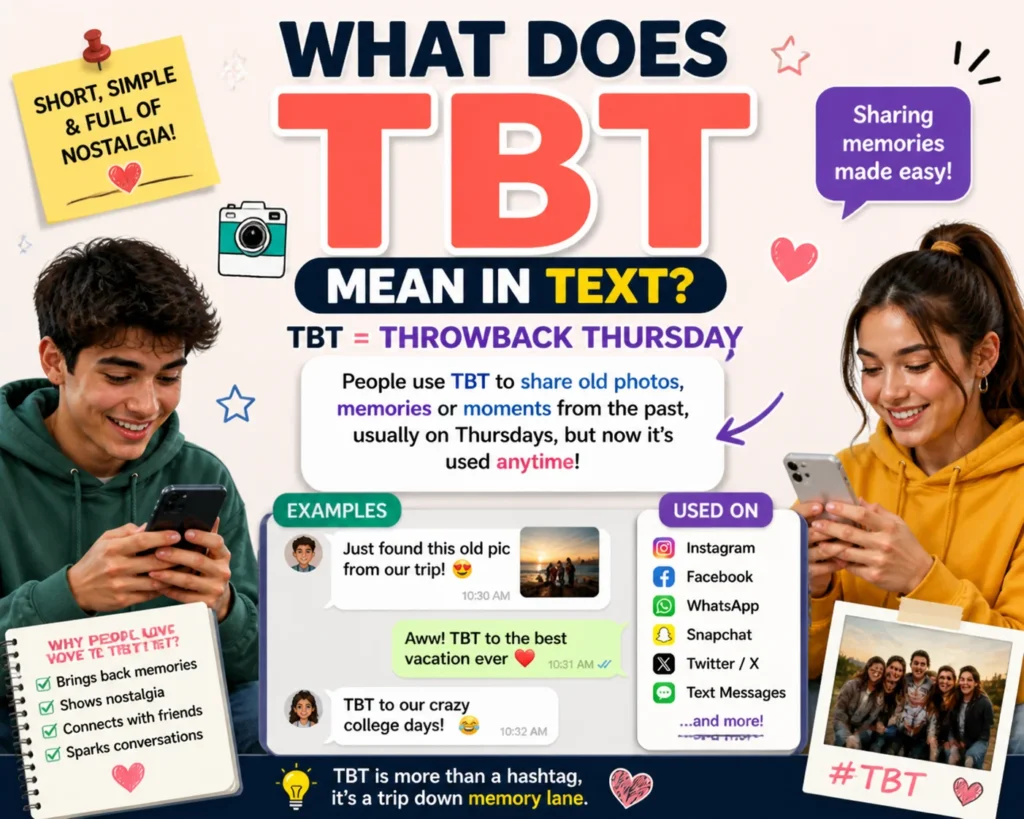
TBT stands for “Throwback Thursday,” a popular social media trend where users post nostalgic content from the past on Thursdays. It’s typically used to share memories, old photos, or experiences that evoke sentimentality or humor. While this term originated on Instagram and Twitter, it has since spread across other platforms, including Facebook, TikTok, and even in text conversations.
TBT means “Throwback Thursday.” It’s a way to share nostalgic moments from the past, typically posted on Thursdays. People search for TBT in text to understand the context of this widely used abbreviation, especially when it’s used in casual conversations, social media posts, and memes. Let’s explore how it works, its cultural influence, and how to use it effectively.
TBT – Quick Meaning
The meaning of TBT is simple yet powerful:
- TBT = Throwback Thursday
- It refers to nostalgic moments from the past.
- It’s typically shared on Thursdays (although it’s sometimes used outside of Thursday for fun).
Common Uses:
- TBT to my high school days – A throwback post showing a picture or memory from high school.
- #TBT – Often followed by a photo or video post to mark the throwback.
- TBT, look at my old hair! – A fun comment to go with a throwback picture.
A typical example of TBT in text could look like this:
Person A: “I’m going to the beach this weekend!”
Person B: “#TBT to last summer when we did the same thing! Good times.”
Here, TBT functions to reference a moment from the past, specifically highlighting the nostalgia of that time.
Origin & Background
The TBT meaning evolved from a simple idea to a viral social media trend. It started on Instagram in the early 2010s as a hashtag to share old photos, typically on Thursdays. The concept of throwing back to old moments on a specific day helped build community engagement, and the practice spread quickly across other platforms like Twitter, Facebook, and Snapchat.
Social media’s tendency to build trends around specific days of the week gave rise to TBT, but its power lies in the emotional appeal. People enjoy revisiting the past, often associating TBT posts with joyful memories, funny experiences, or lessons learned.
Cultural Influence
The impact of TBT has been immense. It has become part of popular internet culture, helping users of all ages engage with their past and create shared memories. Brands have even jumped on the TBT bandwagon, using the hashtag for marketing campaigns to share nostalgic ads or old product versions, tapping into feelings of nostalgia to build a deeper connection with their audience.
Furthermore, TBT has made its way into popular memes, becoming part of meme culture. The hashtag is often used in humorous or ironic contexts, sometimes completely detached from the original intent of nostalgic reflection.
For example, the trend of posting #TBT is also a fun way to showcase personal growth or to poke fun at past mistakes. Some even use TBT humorously to revisit a fashion disaster or an awkward family photo.
Real-Life Conversations
Let’s see how TBT is used in casual, everyday conversation, such as in WhatsApp chats, Instagram DMs, and text messages.
Person A: “Look at this old photo from last summer!”
Person B: “Omg, #TBT! We had so much fun that day.”
Here, TBT is used to relive a happy memory, referencing the day in a playful and nostalgic manner.
Instagram DM
Person A: “Remember this trip to Italy? #TBT”
Person B: “How could I forget?! That gelato was the best.”
Instagram makes TBT a perfect fit, allowing users to post old travel photos, childhood moments, and more with a simple tag.
Text Message
Person A: “Hey, remember this?” [shares an old picture]
Person B: “Oh, wow! TBT! That was so funny!”
In text, TBT serves as a shorthand to recall a shared memory and bring joy to an ongoing conversation.
Emotional & Psychological Meaning
TBT is deeply tied to nostalgia. It often brings up warm emotions related to happy memories, joy, or personal milestones. In conversations, TBT can express:
- Sentimentality – Reflecting fondness for the past.
- Happiness – Reliving fun or carefree times.
- Humor – Looking back at silly moments.
- Connection – Sharing memories that bond you with others.
It reflects how modern communication thrives on shared experiences, even if they are from years ago. In a world where digital images and memories are easily accessible, TBT gives us a structured way to reminisce, reflect, and even laugh at our past selves.
Imagine texting a friend:
You: “I found a picture from our first road trip.”
Friend: “TBT to that crazy weekend! I’m still laughing!”
In this case, TBT represents a connection not only to the memory but to the ongoing friendship.
Usage in Different Contexts
Social Media
On social media, TBT has evolved beyond Instagram. It’s used for nostalgic sharing on Facebook, Twitter, and TikTok, where users upload anything from old photos to vintage videos, often in a humorous or heartfelt way. The hashtag #TBT continues to thrive on these platforms, signaling both personal and public nostalgia.
Friends & Relationships
Within close relationships, TBT can serve as a playful or endearing tool to rekindle memories. It is often used between close friends to share a laugh, remember an inside joke, or relive something special.
Example:
Person A: “TBT to our camping trip last year. I still can’t believe we got lost!”
Person B: “That was such a mess but so much fun!”
It shows a lighthearted connection with your friends, allowing for shared experiences and mutual nostalgia.
Work / Professional Settings
While TBT is mostly casual, it can sometimes appear in work environments for team-building or to foster a friendly, relaxed culture. For example, a company might use TBT to share photos from a company retreat or a team event.
However, in a professional setting, it’s important to use TBT sparingly and ensure the tone is appropriate.
Casual vs Serious Tone
The tone of TBT largely depends on the context. It can be:
- Casual – when sharing light, fun moments from the past.
- Sentimental – when reminiscing about important or emotional moments.
- Humorous – when laughing at past mistakes or embarrassing moments.
In general, TBT fits best in casual conversations and social media posts. Using it in serious conversations might detract from the emotional weight of the discussion.
When NOT to Use It
While TBT is generally harmless, there are certain situations where it’s best avoided:
- Serious or formal settings: Avoid using TBT in professional emails or formal communications.
- Sensitive topics: Don’t use TBT when the past memory involves pain or sadness, unless it’s done with a sensitive and caring tone.
- With strangers: If you don’t know someone well, using TBT might seem too personal or casual.
- In response to recent events: If someone is sharing something current or pressing, responding with TBT may seem dismissive or inappropriate.
Common Misunderstandings
Tone confusion is the most common misunderstanding with TBT. While the intent is often playful or sentimental, some people might misunderstand TBT as a signal that the past is being overly emphasized or romanticized.
For example, if someone posts a TBT about an old relationship, their partner might wonder if they still have feelings for their ex. This highlights the need to consider the context and emotional tone of a TBT post.
Literal vs Figurative Meaning
While TBT literally means “throwing back” to a previous time, figuratively it often symbolizes nostalgia or even a commentary on personal growth. The real meaning of TBT can vary from pure fun to deeper emotional reflection.
Comparison Table
| Term | Meaning | Usage Context | Tone | Similar or Opposite |
|---|---|---|---|---|
| TBT | Throwback Thursday | Social media, casual chats | Nostalgic, casual, fun | #FBF (Flashback Friday) |
| FBF | Flashback Friday | Social media, casual chats | Nostalgic | TBT |
| YOLO | You Only Live Once | Motivational, fun | Exciting, adventurous | – |
| SMH | Shaking My Head | Disbelief, frustration | Dismissive, negative | – |
Key Insight:
TBT works best in relaxed, friendly environments where nostalgia is welcomed. It’s a way of connecting with the past while keeping things light and fun.
Variations / Types
- #TBT – The hashtag used to mark throwback posts.
- Throwback – A shorthand used without the hashtag.
- #FBF – Flashback Friday, a similar trend on Fridays.
- Throwback Pic – Used to refer to the photo posted as a throwback.
- #Throwback – Used in posts to emphasize the nostalgic aspect.
- Old School – Referring to something from the past in a cool or retro way.
- Blast from the Past – A term used to refer to a memorable or surprising moment from the past.
- Retro – Used to describe something old that has a cool, vintage vibe.
- Vintage – Similar to retro, referring to something old with cultural or stylistic value.
- Rewind – A term used informally to look back on the past.
How to Respond When Someone Uses It
Casual Replies
- “I remember that!”
- “Good times.”
- “We should do it again!”
- “That was so fun.”
Funny Replies
- “Oh man, we were such a mess back then.”
- “That hairstyle was everything!”
- “Look at us! What were we thinking?”
Mature Replies
- “It’s nice to see how far we’ve come.”
- “Wow, we’ve changed a lot since then.”
- “That was a meaningful time in my life.”
Respectful Replies
- “Such great memories.”
- “Thanks for sharing that.”
- “I love looking back at that moment.”
Regional & Cultural Usage
Western Culture: TBT is widely used in North America and Europe, where throwback posts have become a fun tradition, especially on social media platforms like Instagram and Twitter.
Asian Culture: The concept of TBT has spread, especially in India, the Philippines, and Indonesia, though it’s less pervasive than in the West. Young people use it, but older generations might not fully embrace it.
Middle Eastern Culture: TBT is popular, especially in Dubai and Saudi Arabia, where the younger population uses social media frequently. However, like in other regions, its usage may be limited to casual settings.
Global Internet Usage: As the internet connects cultures, TBT is understood globally, but its use can vary. It remains popular among Gen Z across TikTok, Instagram, and Snapchat.
Is It Safe for Kids?
TBT is safe for kids, as it is typically used in a lighthearted, fun context. However, be mindful of the content shared with TBT—old photos or videos that might be embarrassing or private should be shared responsibly.
FAQs
What does TBT mean in text?
TBT means “Throwback Thursday.” It’s used to share old memories, usually on social media, on Thursdays.
Can I use TBT on any day?
TBT is typically used on Thursdays, but some people use it informally on other days.
Is TBT only used on Instagram?
No, TBT is used across multiple platforms including Twitter, Facebook, Snapchat, and TikTok.
How do I use TBT in a text?
You can use TBT to refer to old memories: “#TBT to that road trip last summer.”
What is the difference between TBT and FBF?
FBF (Flashback Friday) is similar to TBT but is used on Fridays instead of Thursdays.
Can TBT be used for negative memories?
While TBT is mostly used for happy or nostalgic memories, it can be used for negative moments, but it should be handled with care.
Can TBT be used for professional content?
TBT is informal and typically used for casual or personal content, though some businesses use it for brand engagement.
Does TBT only refer to photos?
No, it can refer to videos, memories, or any content that’s nostalgic.
How can I respond to a TBT post?
A simple response could be “Good times!” or “That was so fun.”
Conclusion
TBT is more than just an acronym; it’s a cultural phenomenon that connects us to the past. Whether you’re using it to reminisce about good times or laugh at embarrassing moments, TBT allows us to bond over shared experiences. Just remember to use it in the right context—whether it’s for fun, sentimentality, or humor—and it will enhance your social media experience.
Enjoy sharing those throwback memories, and don’t forget to post your own TBT next Thursday!